
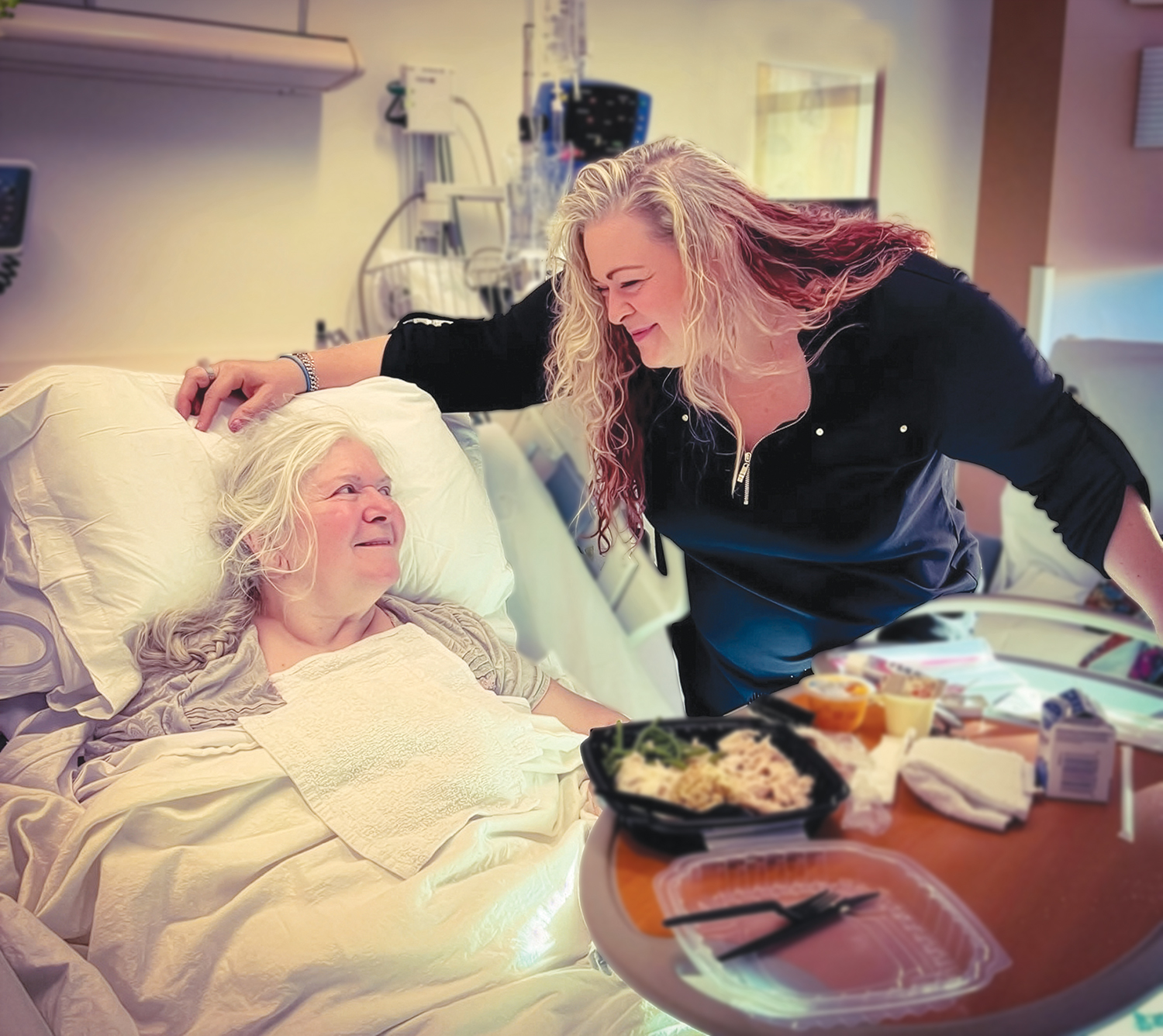
Care is There When You Need . . . or Become a Caregiver
As with many people, Christina Keys’ caregiving journey abruptly changed the landscape of her life. At 44 she was active, a homeowner, earning six figures in a thriving tech career, enjoying annual vacations with her partner, and playing softball.
One morning in 2013, she was on the phone with her 62-year-old mom, Pat, laughing and screaming about seeing a mouse in her new car — eek!
That afternoon came another call — from a Seattle hospital. Christina’s mom (then single) had suffered a stroke, was on life support, and had a 1% chance of surviving the next 30 days.
In shock, Christina packed a suitcase and her laptop and drove north.
Pat survived but remained in the hospital for four months — paralyzed on one side and enduring frequent seizures. Christina commuted between Vancouver and Seattle, working in her mom’s hospital room, returning home to shower and pack fresh provisions.
Pat’s discharge marked the beginning of Christina’s caregiving journey. “I had no experience, no training,” she said. With bedrooms upstairs and only a half-bath downstairs, Pat’s Seattle home was ill-equipped for the “adventures” to come. So, they sold her home of 30 years and built an ADA-equipped house about eight blocks from Christine’s in Vancouver.
Among the first harsh realities was that while Pat had been an aerospace engineer with great insurance and a pension, Medicare and supplement programs wouldn’t cover the cost of her in-home care needs. Neither, it turned out, would her pension or Christina’s income.
“She needed care 10 hours a day,” Christina recalls, “not to mention new meds, cleaning supplies, medical equipment (Medicare allows one piece every five years), grab bars, a hospital bed, and a walker,”
“Googling, I made mistakes,” Christina says. “When leaving the hospital, nobody tells you who to call to get a ramp built. We were thrown into this.”
Looking back at a long-ago social media post reminds Christina of her lack of knowledge at the time. She had posted: “Does anyone know if there are babysitters for adults?”
Below Christina shares her wisdom, suggestions, and resources for anyone facing the daunting proposition of caring for a loved one. And while during her caregiving journey Christina she worked unimagined jobs (menial gigs, selling things, donating plasma), today she is a blogger, an in-demand podcast guest, is soon to publish the book, “Caregiver Recovery, Life after 10 Years Beyond the Wheelchair,” and also launch the “Solo Aging” educational program.
When Crisis Comes
The first “must” when a loved one needs care after leaving the hospital: ask the discharge planner for home health referrals (for physical/occupational therapy, bath aid, and nursing care).
Insurance coverage for such things is predicated on obtaining referrals before leaving the hospital.
If 24-hour care is needed, the patient should be transferred from the hospital to a facility providing such care. While there, assessments will be made about the patient’s future care needs.
Christina recommends calling at least three in-home care agencies. Costs average $30-$60 per hour locally, she says, based on the level of care and time needed. Veterans or their spouses should contact a VA case manager and ask about aid, attendance, and in-home care. For state insurance or Medicaid, contact the Area Agency on Aging or the Dept. of Human Services. “Medicaid doesn’t mean long-term care,” Christina cautions.
Those considering an independent caregiver should vet carefully. Christina recommends seeking referrals from friends, family, and their social network. “These people will be coming into your home,” she says, “you’ll want a background check and references.”
“When this is all new, every call matters,” Christina says. “Every call you make, ask if they know of any other companies or nonprofits that could help with your care journey questions. You might discover programs like free food delivery or help around the house, free DME, even financial grants for someone in your situation.” These types of things can also sometimes be found on bulletin boards in medical offices.
“Tech is your friend,” she adds. “Look into a video doorbell, two-way cameras, and the like. Your cable or a home security company can help.”
Christina also recommends a medical pendant. “You may not think you need it, but during recovery it can be a lifesaver — it saved my mom’s life more than once.”
Financial Realities
If the patient Is still working, short- or long-term disability may apply. Christina recommends looking into long-term insurance, whether you can pull money from a life insurance policy, or if any financial grants are available through the Area Agency on Aging. “Check everything you can before tapping into your 401K or your home’s equity.”
Christina also urges people to compare pharmacies. “Call your insurance company and compare costs between pharmacies — including your current pharmacy. Also, check into mail order and obtaining 90-day vs 30-day prescriptions to save time and money.”
Get Support
“There are support groups for every condition,” Christina says. “Cancer, Alzheimer’s, brain injury — there are national groups every-where, that you can attend in person or online. It’s important to connect with people in your situation. You’ll learn a lot from others who have walked through it and adapted, and you’ll feel less alone.”
This is especially important in the beginning, she says. “You’ll need physical and emotional support, and you’ll make fewer mistakes.”
Also helpful is a care coach or care concierge. Care coaches can be found through social media and online. “I’m a care coach,” Christina says. “If someone calls, I’ll get their basics — care coaches don’t provide the hands-on care but do the legwork to find resources (set appointments, arrange transportation) while providing support so you know you’re not alone. “This kind of help takes a lot off your plate.”
Another important practice “for sanity” from the beginning: keep notes. “I recorded doctor visits so I didn’t have to try to remember everything. Likewise, I used a caregiver app — which simplified life in so many ways — to track appointments, med schedules, etc.”
Get Your Paperwork Together
Early on, Christina says getting things in order is vital. This includes Power of Attorney, a will or trust, and Advance Directive documents. “If you’re incapacitated (even temporarily), you’ll need someone paying the mortgage.”
Caring for YOU
“I wish I’d have known this stuff from the beginning,” Christina says. “It would have helped in so many ways, including not feeling so alone. Don’t wait to reach out. . . it can really save headaches and money.”
Feeling alone is vital to address. “Ignoring this can be harmful to your physical and emotional health,” says Christina. For help with this, she recommends Daughterhood.org for free online classes and support groups, and Caregivers Action Network, “which also has a resource hotline” — which can be critical in the beginning.”
“Other ways to not feel so alone include keeping a caregiver journal and listening to podcasts on caregiving.” A few she likes: “All Homecare Matters,” “Happy Healthy Caregiver,” and “The Caregiver’s Journal.”
These days, Christina is busy as CEO of “Keys for Caregiving,” serving as a frequent podcast expert, conducting workshops and more. She is also a grateful caregiver.
“In the beginning the experience was like learning to fly while building the plane with no instruction manual or tools — all while scared of heights,” Christina says. “One thing many people feel is they’re failing at everything. Be good to yourself, reach out for help and wisdom from others, and hang in there.”
Something that helped Christina and her mom hang in there were what they called “Team Mom Moments.” Like the time they needed to get Pat upstairs. Christina sat on the bottom step, placed her mom between her legs, and scooted them up, one step at a time.
“It took over 30 minutes and we were both crying, but by the time we got to the top, we cheered, ‘WE DID IT!’ Team Mom Moments were a precious part of our journey over those 10 years. . . painful and hard, but victorious. And I treasure the memories.”
Kristan Dael
50plus Magazine
Kristan Dael is the alter-ego of Jennifer McCammon.